

The Procurement Mistake That Delays Good Developments
Key Takeaways
- The biggest procurement mistake South West developers make is going straight to a single lump-sum main contractor tender too early, before design and buildability are properly resolved.
- This “traditional tender first” mindset bakes in delays, re-design cycles, and cost uplifts that can kill otherwise viable residential and commercial schemes.
- Construction management offers a faster, more flexible route where the developer appoints trade contractors directly, coordinated by We Are Ease, avoiding long tender periods and inflated risk pricing.
- A coastal hospitality project that might face a 12-month delay under traditional tendering can achieve a 6-month start-on-site under a construction management route.
- Early involvement of We Are Ease in design and procurement can turn “financially unviable” projects into deliverable developments.
Why Good South West Developments Get Stuck at Procurement
Promising schemes across Devon, Cornwall, Somerset, and Dorset never get past the “numbers don’t stack” stage. Not because the buildings are bad ideas – but because of how they are procured.
Property developers typically move from planning drawings straight to a competitive main contractor tender, expecting clarity on cost, time, and risk in one hit. This approach was designed for large institutional construction projects, not lean, fast-moving private developments with tight finance windows and demanding funders.
By the time the first set of tenders returns – often 10 to 14 weeks later – the market has moved, trades are busier, interest rates may have shifted, and the appraisal is out of date. This is particularly damaging for project types common in the region:
- Coastal aparthotels and boutique hotels
- Barn conversions in rural settings
- Small residential schemes of 6 to 20 units
- Mixed-use high street redevelopments
The One Procurement Mistake: Treating Tender as the Starting Point
The mistake is assuming that appointing a single JCT Design & Build main contractor on a lump-sum is the only “proper” way to procure a project.
In practice, this means tendering incomplete designs – often at RIBA Stage 3 with unresolved structure and M&E – forcing contractors to guess and load risk into their prices. Tender documents frequently omit key buildability decisions around access, logistics, and phased works around neighbours, so contractors add time contingencies that extend programme durations.
Consider a typical 16-unit residential scheme in Exeter. The development process might lose 3 to 4 months to:
| Stage | Typical Duration |
| Prequalification | 3-4 weeks |
| Tender issue and period | 6-8 weeks |
| Queries and clarifications | 2-3 weeks |
| Post-tender interviews | 1-2 weeks |
| Re-pricing | 2-4 weeks |
When tender returns come back 10 to 20% over budget, developers either try to “value engineer” after the event – adding more delay – or abandon the scheme as unviable. Good developments get stuck not because of the building, but because of the construction process used to deliver it.
How Traditional Tendering Builds Delay into Your Programme
The traditional lump-sum tender route systematically introduces delays at multiple stages. Understanding these mechanisms helps explain why so many South West schemes miss their intended timelines.
Design development happens in the wrong order. Tender is issued at Stage 3, then re-designed at Stage 4 to cut costs, then re-tendered. This cycle commonly adds 4 to 6 months before a spade hits the ground.
The “Chinese whispers” effect compounds delays. Developer talks to architect, architect talks to contractor, contractor talks to subcontractors. Each layer adds response time and potential misunderstanding, slowing decision making across the whole team.
Funding structures punish pre-construction delays. Bridging finance or development loans in the South West often have fixed drawdown windows. Every extra month pre-start is interest with no revenue – money spent without progress.
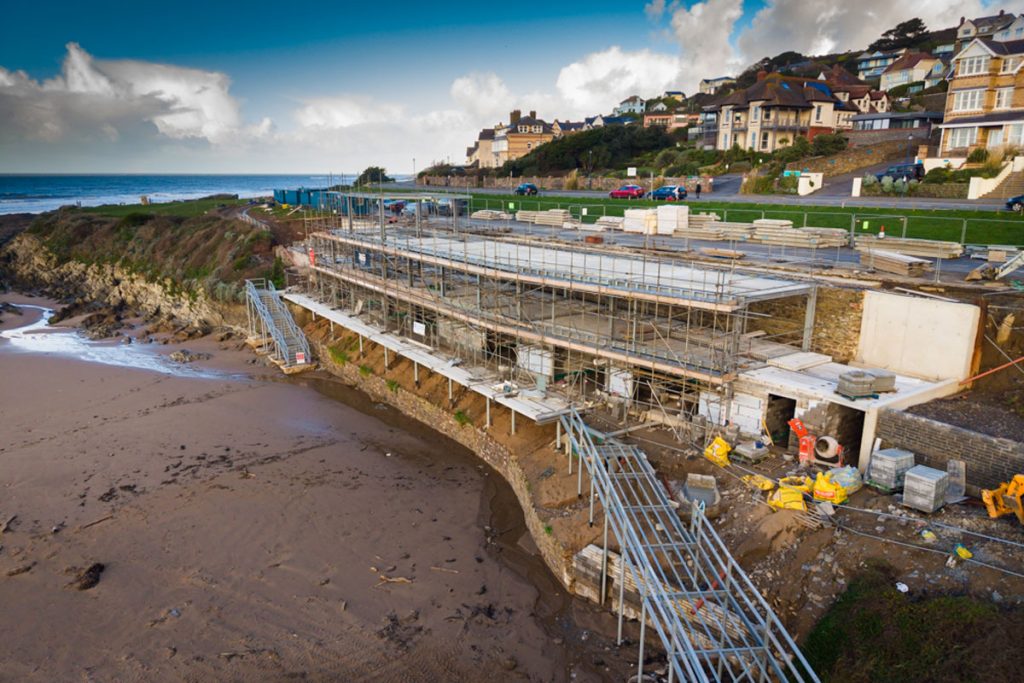
Consider a coastal hospitality conversion in Cornwall. The scheme misses a summer trading season because the main contract tender and re-design cycle pushes start-on-site from March 2024 to September 2024. A full year of revenue is lost.
Main contractors will also push back start dates if their order books fill during a drawn-out tender process. This availability delay can add 8 to 12 weeks on top of existing delays, further damaging the project plan.
The Hidden Cost of “Let the Main Contractor Sort It”
Delegating everything to a single contractor feels simpler but often hides margin stacking, risk premiums, and reduced control over specification changes.
Here’s how costs accumulate under the traditional model:
- Each subcontractor’s price is marked up by the main contractor for preliminaries, overheads, and profit – adding 10 to 20% without additional value to the developer
- Main contractors protect themselves from unknowns by pricing provisional sums high and inserting long lead times
- Value engineering becomes reactive: affordability problems only surface after the tender, meaning cost savings require re-design and re-approvals from building control
Consider a 10-unit luxury home development near Totnes. Under traditional tendering, façade materials, glazing specification, and landscaping are downgraded late in the construction process to save costs. This damages GDV while the scheme still finishes late.
The 2025 wave of contractor administrations – including Merit, Kingston Modular, Elements Europe, and others – demonstrates the risk of contractor insolvency on long, high-value lump-sum contracts. When a main contractor fails mid-project, developers face a half-built site, disputes with the supply chain, and months of restart delay.
Construction Management: The Faster Alternative to Tender-Led Procurement
Construction management is a proven alternative that keeps control with the developer and removes much of the traditional tender bottleneck.
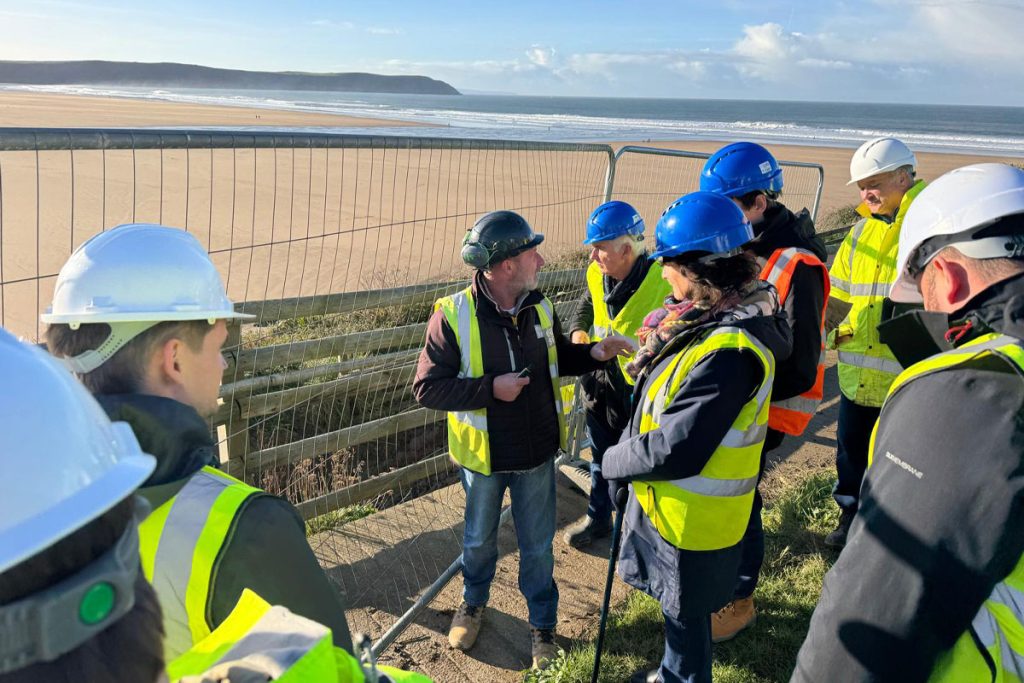
The core model works like this: We Are Ease acts as construction manager and Principal Contractor under CDM, while the developer appoints trade contractors directly – groundworks, frame, M&E, fit-out, and so on.
This approach offers key benefits for South West developers:
| Benefit | Impact |
| Earlier start on site | Phased procurement means enabling works begin sooner |
| Transparent trade prices | No hidden margin stacking |
| Design-construction overlap | Safely accelerate programme |
| Responsive decision making | Faster problem solving when issues arise |
We Are Ease prepares realistic trade packages, runs short focused trade tenders or negotiated procurements, and sequences works to suit local labour and supply constraints. This is particularly effective for projects that came back “unbuildable” under traditional construction methods – cliff-side houses, listed building refurbishments, and constrained town-centre sites.
Construction management is standard practice on many London and national schemes. We Are Ease brings that structure to Devon, Cornwall, Somerset, and Dorset projects.
Case Example: Turning an “Unviable” Coastal Scheme into a Buildable Project
Consider a 14-key boutique hotel conversion near St Ives. Planning consent was secured in early 2023. An initial lump-sum tender in mid-2023 came back 22% over budget.
The original path looked like this:
- Traditional tender added 4 months to programme
- Contractor availability added a further 2 months
- The scheme risked missing the 2024 summer season entirely
When We Are Ease became involved, they re-structured procurement into trade packages, re-sequenced the build, and started enabling works within 8 weeks of appointment.
Specific improvements achieved:
- Negotiated local groundworks and carpentry packages with reliable suppliers
- Re-specified M&E for energy efficiency and easier installation
- Used off-site components to cut programme length
- Established effective communication with other stakeholders including the local authorities
Under construction management, the project achieved practical completion before July 2024. The scheme captured peak season revenue and met lender covenants. The difference between viability and failure came down to procurement strategy, not the quality of the building itself.
How We Are Ease De-Risks Procurement from Day One
We Are Ease’s role during pre-construction focuses on feasibility, buildability, and procurement strategy tailored to South West market conditions.
Involvement begins at or before RIBA Stage 2-3, working with architects and engineers to align layouts, structure, and services with buildable, locally deliverable solutions.
Specific actions include:
- Early cost planning against realistic budget expectations
- Market testing with local trades in Devon and Cornwall
- Logistics planning for tight or coastal sites
- Realistic programme modelling based on resource availability
- Coordination with different stages of design development
Trade packages are structured to match how local subcontractors actually work – combined groundworks and drainage, carpentry and roofing – to attract competitive pricing and reliable resource. This approach meets industry standards while adapting to regional supply chain realities.
Developers see live trade costs, prelims, and risk allowances through transparent reporting. This enables better conversations with funders and JV partners, supporting informed decisions throughout the project.
This expertise applies across both residential and commercial hospitality projects. The same procurement discipline delivers whether it’s a single luxury home near Salcombe or a mixed-use block in Exeter.

When to Rethink Your Procurement Strategy
Certain warning signs indicate a South West development is heading for delays or “unviable” status because of its procurement route.
Common triggers to watch for:
- Main contract tenders repeatedly coming back over budget
- Contractor availability slipping your start dates
- Lenders questioning programme assumptions
- GDV being eroded by late value-engineering
- Materials and resources proving harder to secure than expected
Early-stage symptoms include:
- Planning drawings not coordinated with structure
- M&E still unresolved at tender stage
- No clear logistics plan for tight access sites in coastal towns
- Timelines that don’t account for transport and delivery constraints
Developers should pause and review procurement before issuing another lump-sum tender. This is where We Are Ease’s “Project Doctor” service can rescue schemes before they stall. Even mid-project, if a main contractor collapses or performance is poor, a move towards a construction management structure can sometimes stabilise and complete the build.
Treat procurement as a strategic decision equal to site acquisition or design concept – not a box-ticking exercise at the end of planning. Getting this right is crucial to achieving a cost effective outcome.
Practical First Steps for South West Developers
If you’re about to procure – or stuck after a failed tender – here’s an actionable checklist:
- Schedule a feasibility and procurement review with We Are Ease before going to tender, ideally as soon as planning is submitted or consented
- Prepare three key documents for that review:
- Current drawings (RIBA Stage 2/3)
- A high-level appraisal with budget expectations
- Any lender or regulatory requirements on programme or cost certainty
- Explore an outline construction management programme showing how early works (demolition, enabling, groundworks) could start while final design details are completed
- Contact We Are Ease’s Devon or Cornwall office during normal hours (Mon-Fri, 9am-5pm) to discuss your specific site and milestones, rather than waiting for tender results that may already be out of date
- Treat this stage as a collaboration where small decisions on procurement route and trade package strategy will have more impact on delay and viability than almost any later “quick fix”
The support and coordination you establish now shapes whether your next project meets expectations or stalls at procurement.
FAQs for Developers
Is construction management suitable for smaller developments, or only large schemes?
Construction management works well from one-off high-end homes and 4 to 6 unit infill schemes up to larger hospitality and mixed-use projects, provided there is a clear plan and experienced construction managers like We Are Ease coordinating the works. Many South West projects between £750k and £10m construction value benefit most because they are too complex for purely local “design & build” packages but too lean for big-city main contractors to deliver efficiently.
Will my lender accept a construction management route instead of a lump-sum contract?
Most development lenders are open to construction management if they can see clear cost control, a realistic programme, and a competent construction manager appointed. We Are Ease regularly supports clients with lender presentations, cashflow forecasts, and risk registers to demonstrate that the procurement model is robust and transparent. Risk management documentation helps lenders understand the managed approach to expenditure and scheduling.
Do I lose price certainty by not using a single lump-sum main contractor?
While a lump-sum looks certain on paper, it often leads to change orders and claims when drawings are incomplete. Construction management offers dynamic control with early trade prices and ongoing cost tracking. We Are Ease sets a target budget and manages each trade package against it, giving developers early warning and options if costs move – instead of surprises after the fact.
Can I switch to a construction management approach if my main contractor has already withdrawn or gone bust?
Yes, in many cases We Are Ease can step in mid-project, stabilise the site, review what has been achieved, and help re-procure remaining works on a trade-by-trade basis. This is exactly what the “Project Doctor” service is designed for: diagnosing issues, restructuring procurement, and getting works safely moving again with clear responsibility for each element.
How early should I involve We Are Ease on a new development?
Involve We Are Ease as soon as a site is under offer or planning is being prepared – ideally at RIBA Stage 1-2 – so buildability and procurement strategy can shape the design from the start. Earlier involvement usually means fewer re-design cycles, a shorter pre-construction period, and a much higher chance of hitting the first intended trading or sales window. This is vital for delivering the success you expect from your investment.
About We Are Ease
We Are Ease is a specialist construction management consultancy for design-led residential and mixed-use projects in the South West of England.
Our core services:
- Construction Management: Coordinating trade contractors, managing programme, quality, and cost transparency
- Development Management: Supporting developers from feasibility through completion
- Client Project Management: Acting as the client’s representative throughout the build
- Project Doctor: Specialist intervention service for troubled builds already showing signs of drift
Where we work:
Based in Devon, we work across Devon, Cornwall, Somerset, and Dorset. Our experience spans coastal, rural, and urban infill sites each with their unique challenges.
How we work:
We appoint trade contractors directly on the client’s behalf while We Are Ease coordinates, acts as principal contractor for CDM, and manages cost, risk, quality control, and safety. No hidden mark-ups. Complete transparency.
Project types we handle:
- Bespoke one-off homes for high net worth individuals
- Barn conversions and loft conversions
- Hospitality-led schemes
- Small residential developments
- Home renovation and refurbishment projects
- Interior design coordination with specialist suppliers
Our promise: early involvement to protect both budget and architectural intent. We help reduce costs while preserving what makes each design special. You can read about real projects and case studies here.
Contact We Are Ease
If you’re an architect or developer planning projects for 2026–2027 in the South West, we’d welcome an early, no-obligation conversation about how construction management could protect your design and budget.
Get in touch:
- Address: The Pavilion, Moorhaven, Bittaford, Devon, PL21 0TZ
- Telephone: 01752 895 487
- Email: info@weareease.com
- Office hours: Monday–Friday, 9am–5pm
- Book a call: Project Assessment Form
When to contact us:
The biggest cost saving opportunities exist before planning submission or during early technical design. This is when construction management input delivers the greatest value.
For architects: Involve We Are Ease as your delivery partner to keep good design buildable and within budget. We complement your design leadership with contractor-side insight.
For developers: Request a feasibility review if you’re starting a new project, or a “Project Doctor” audit if your current scheme is showing signs of cost drift.
Don’t let cost creep turn your vision into a compromise. The initial investment in proper cost control pays for itself many times over in avoided overruns and protected design quality.